
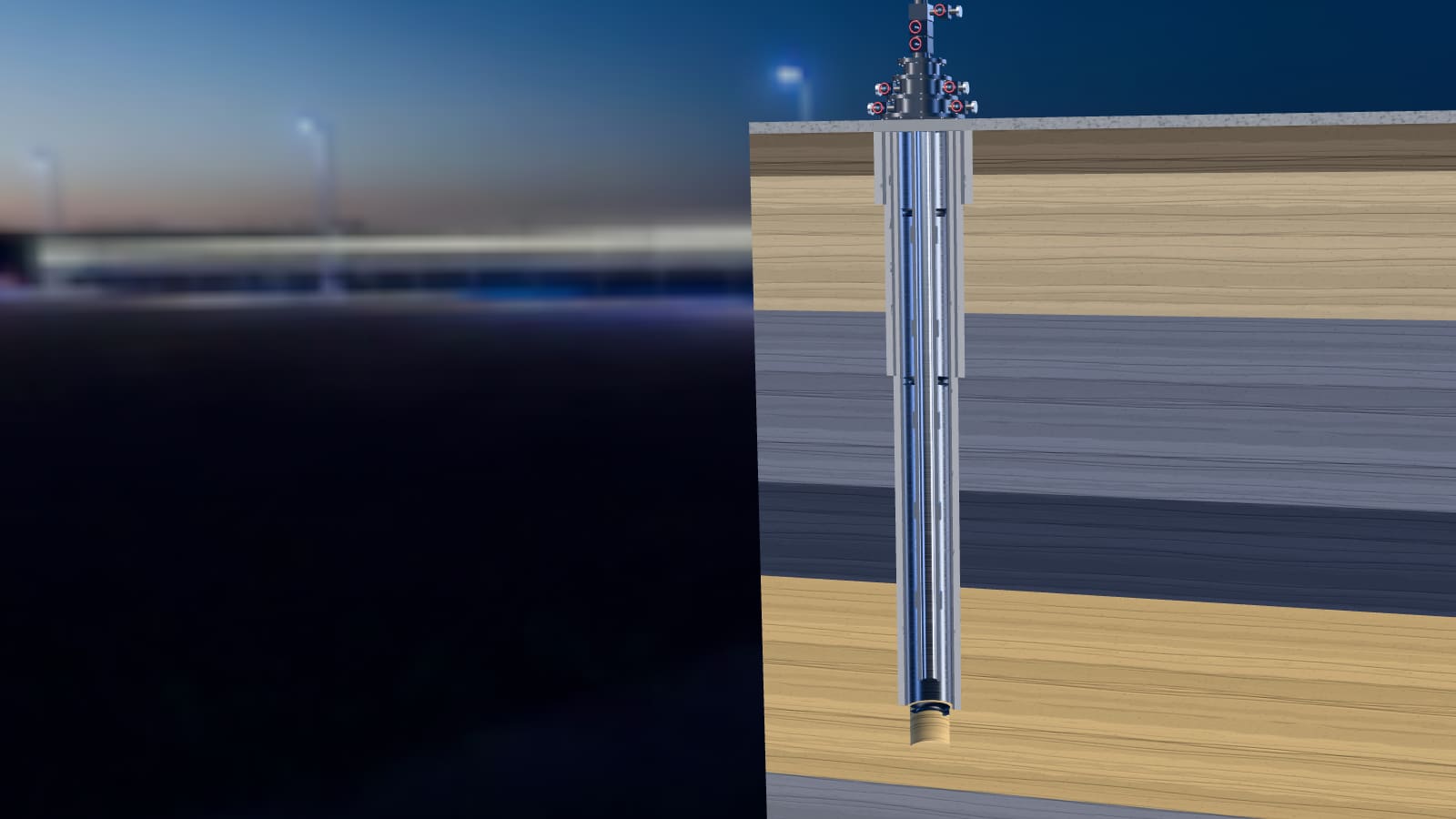
Liquid, injected deep
Carbon dioxide is pressurised until it becomes a liquid, then injected into porous rock formations that suit it.
Services08Carbon capture and storage
Storing carbon dioxide underground depends on one man-made thing: the well. We bring well, completions, petroleum and flow assurance engineering to CCS projects, so the injection well does its job for as long as the carbon dioxide has to stay.
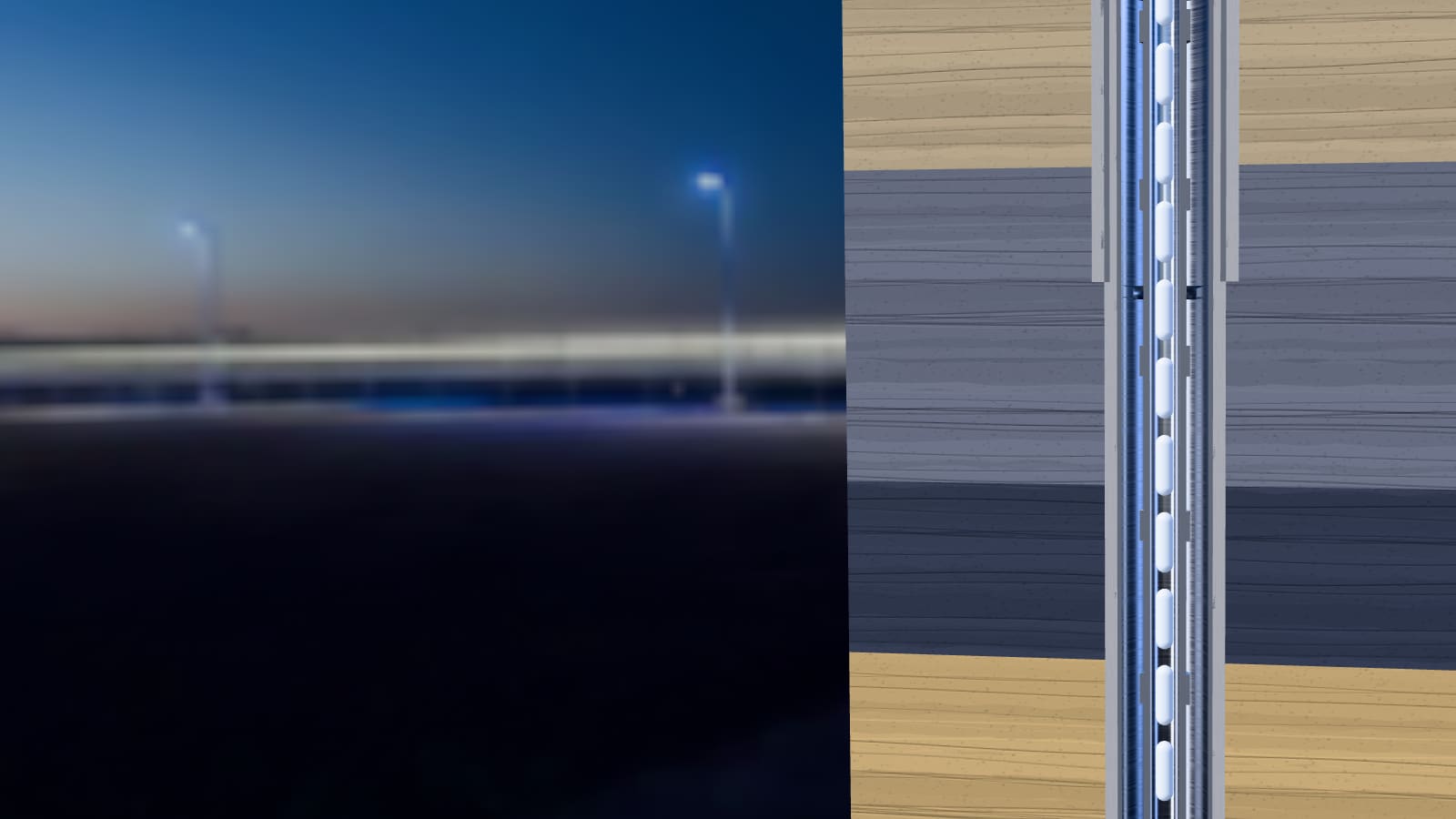
01Inject
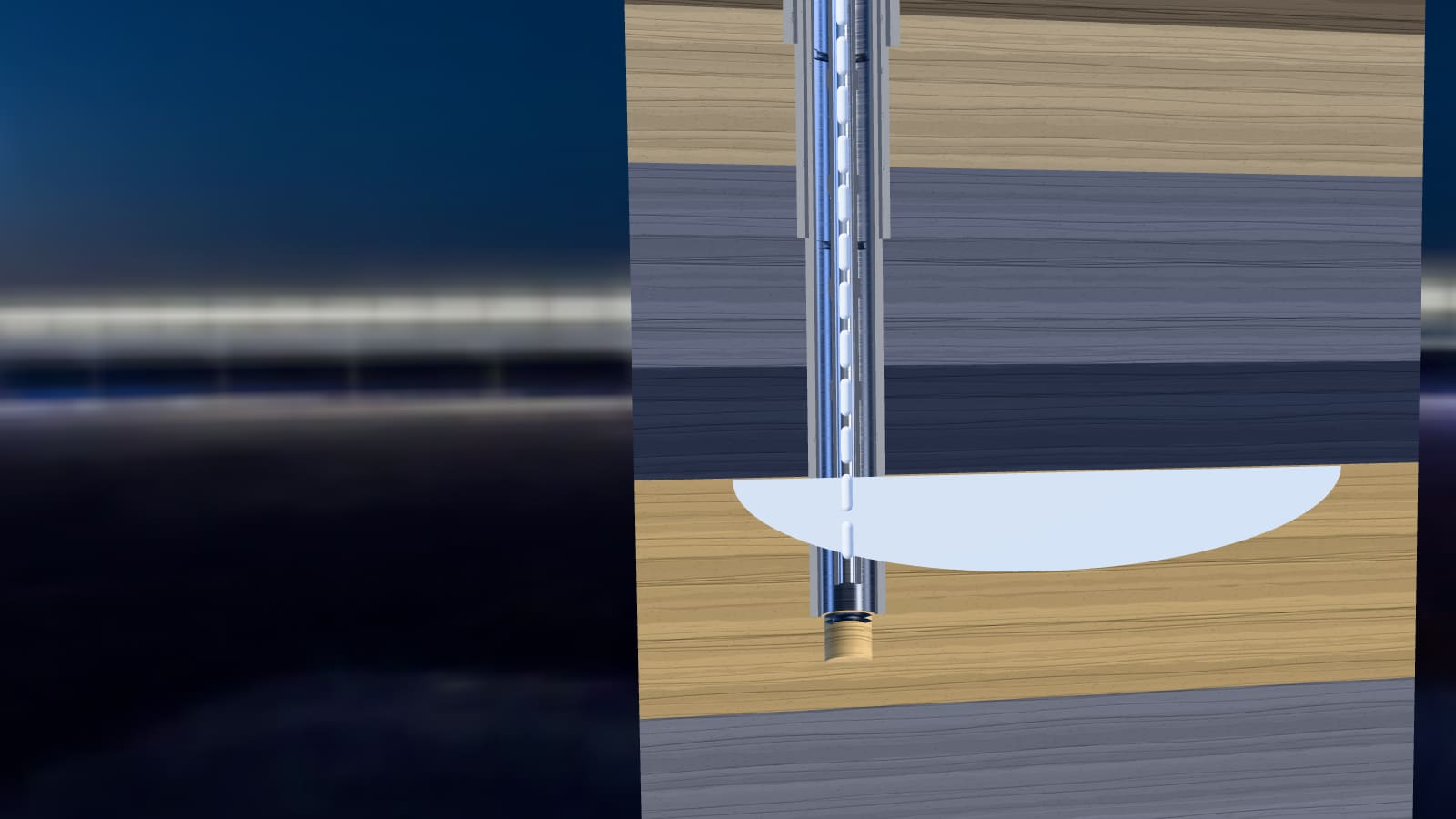
Carbon dioxide is pressurised until it is a liquid. It goes down the injection tubing, through the casing, to a porous formation chosen for it. The well is the only way in, so the well has to be right.
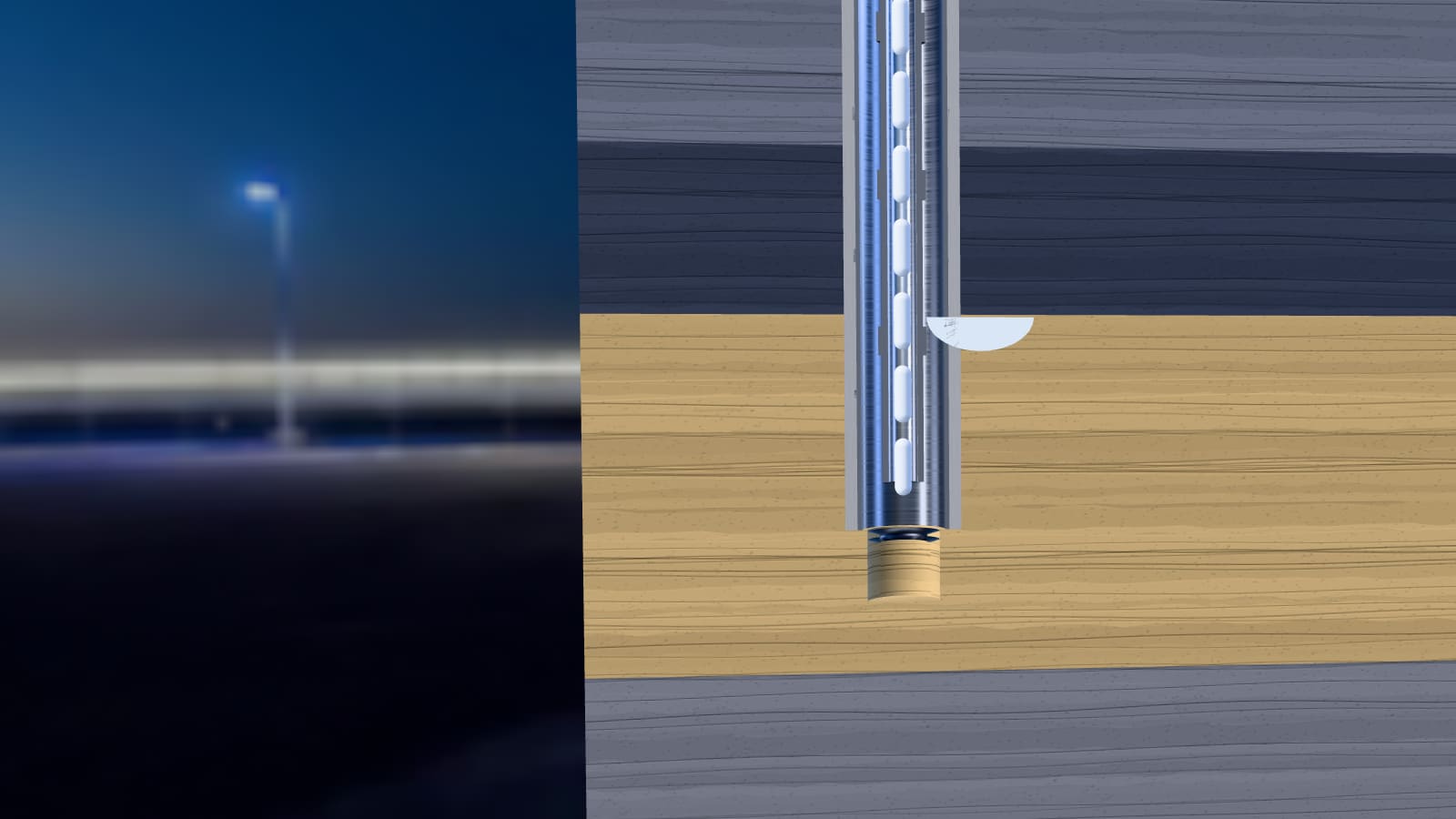
02Sweep
At depth the earth’s own pressure and temperature take the carbon dioxide to the supercritical state. It is highly compressed, but it flows like a gas, so it sweeps through the pores and displaces the fluids ahead of it. Under the cap it forms a volume that grows.
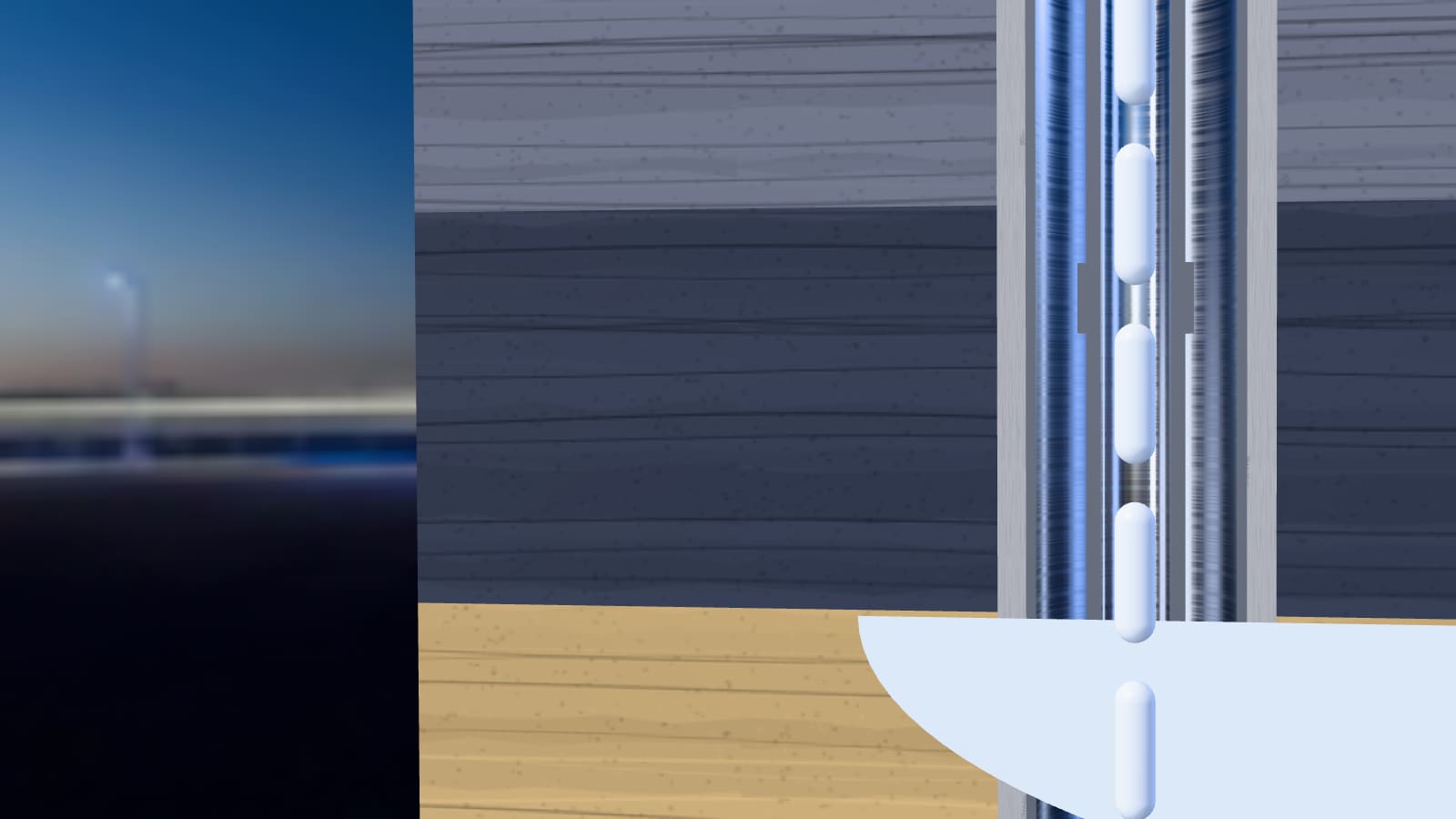
03The cap and the well
The caprock is the lid. The well is the one hole through everything above it. Where the well crosses the cap, the cement sheath is what keeps that path sealed. This is where we spend our engineering: on cement, casing and completion that will hold for as long as the storage has to.
04Stay
A properly stored volume can remain underground for tens of thousands of years, as oil and gas deposits have stayed in place until the geology around them was disturbed. The job of the engineering is to make sure the well is not what disturbs it.
Our approach
How the carbon dioxide is stored, how long it stays, and who does the work. Each layer rests on the one below.
Carbon dioxide is pressurised until it becomes a liquid, then injected into porous rock formations that suit it.
At depth, the earth’s normal pressure and temperature gradients take it to the supercritical state. It is highly compressed but it still flows like a gas, so it sweeps through the porous rock and displaces the fluids already there.
A properly stored volume can stay underground for tens of thousands of years, just as oil and gas deposits have stayed where they are until the geology around them was disturbed.
We take a multi-disciplinary approach. Through liaison we have put together well engineers, completions engineers, petroleum engineers and flow assurance experts, each experienced in their own field.
Our workflow and deliverables for carbon dioxide geological storage run through three interconnected stages. We will walk you through them on a call.
Start
A project at an early stage, or a well design that has to prove itself. We read what you have and say where we would look first. Every engagement is strictly confidential.